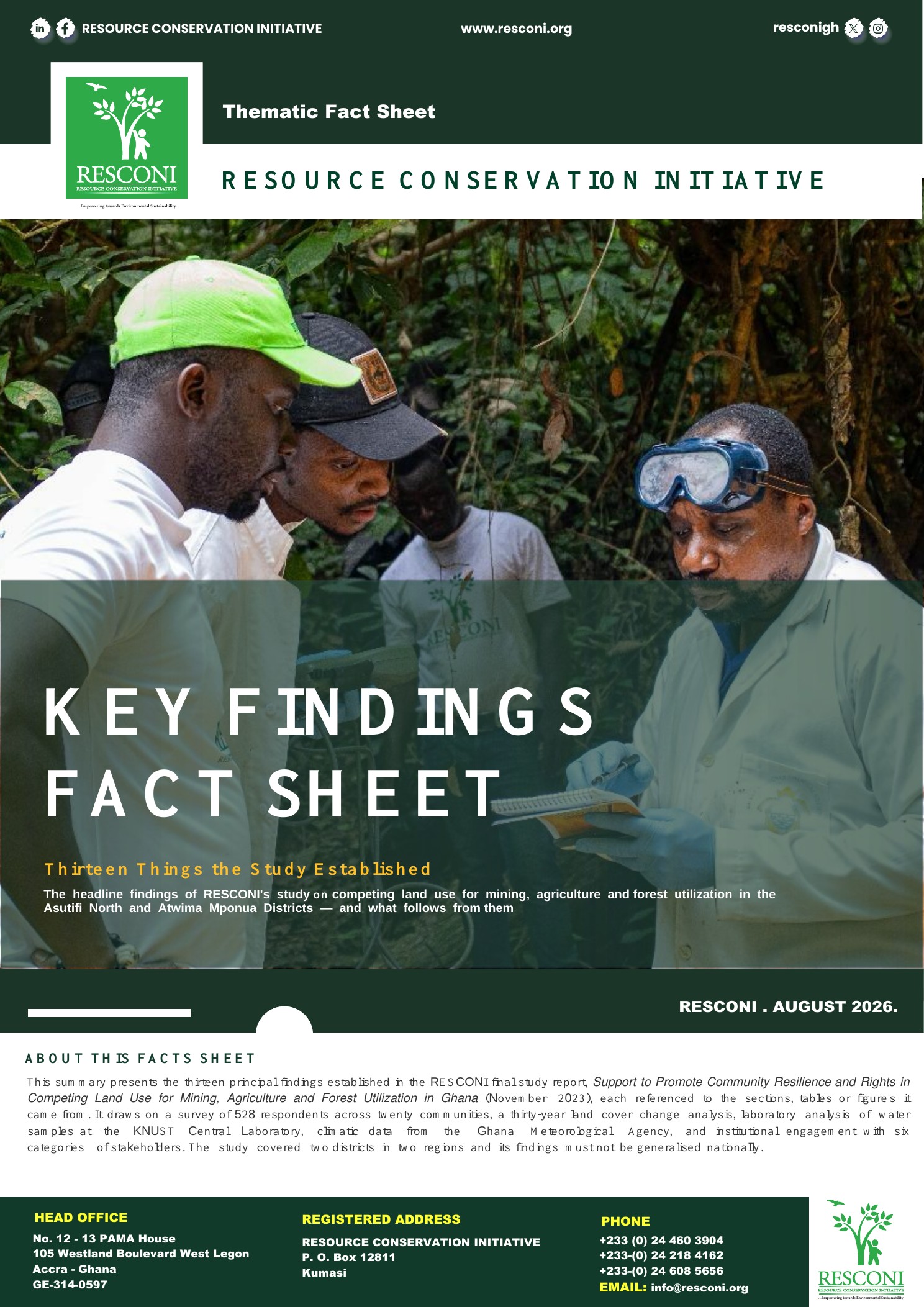
This summary presents the thirteen principal findings from RESCONI's study of competing land use for mining, agriculture and forest utilization in Asutifi North and Atwima Mponua. It draws together evidence from 528 respondents, thirty years of land-cover change, laboratory water analysis, climate data and institutional engagement.
Prepared by: Resource Conservation Initiative (RESCONI), August 2026 Read Document
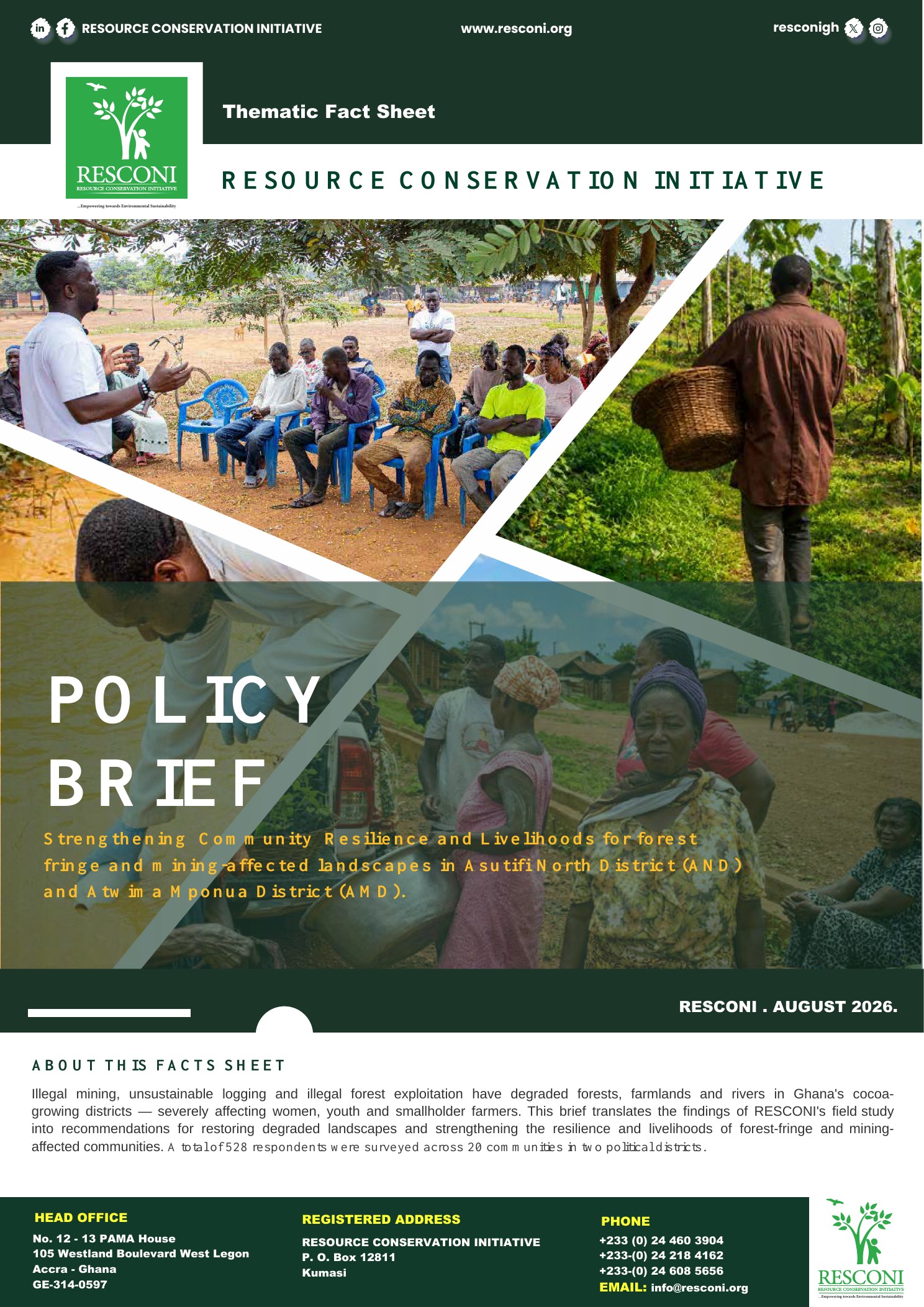
This policy brief translates RESCONI's field evidence into recommendations for restoring degraded landscapes and strengthening livelihoods in forest-fringe and mining-affected communities. It focuses on the effects of illegal mining, unsustainable logging and forest exploitation on women, youth and smallholder farmers.
Prepared by: Resource Conservation Initiative (RESCONI), August 2026 Read Document
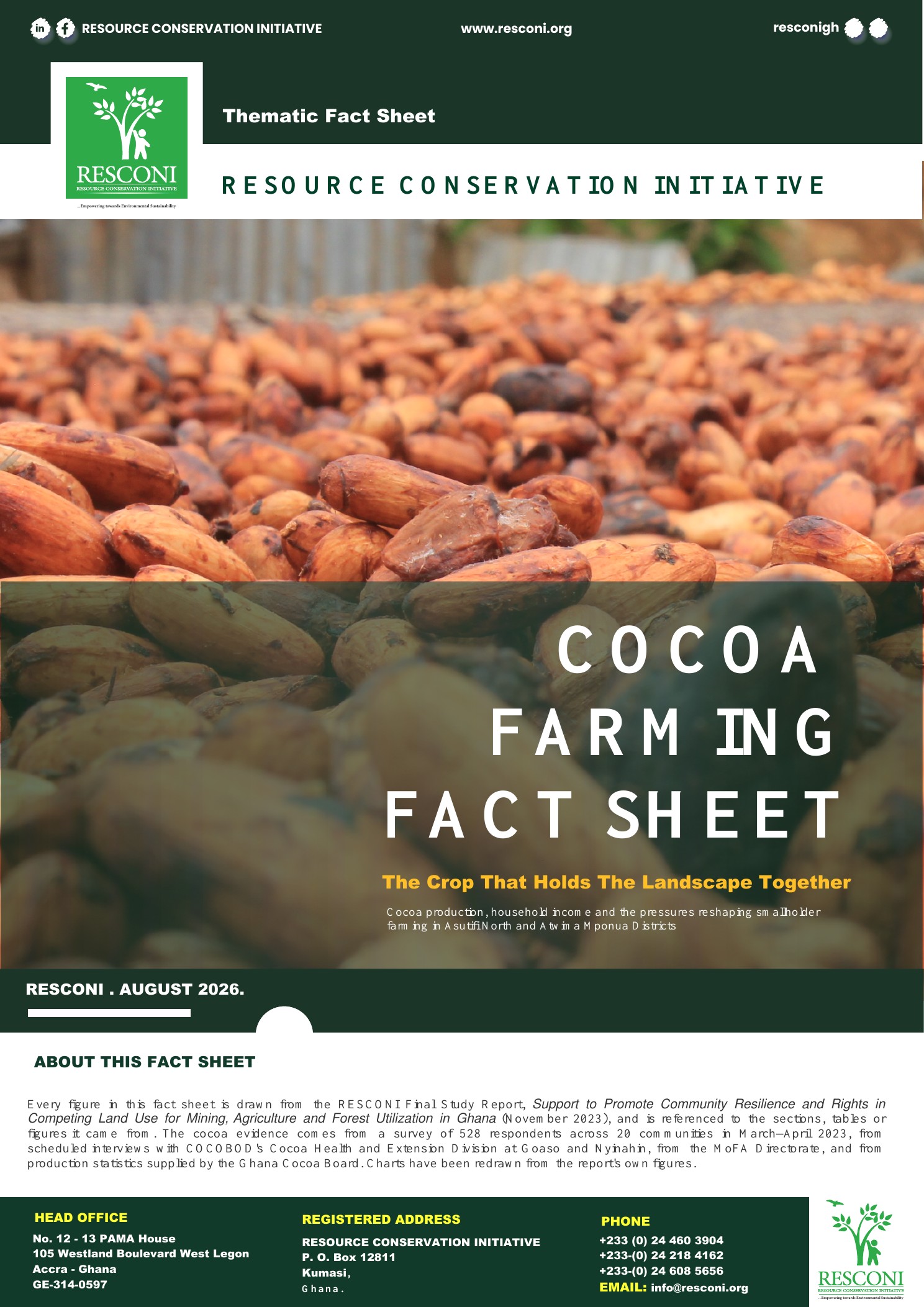
This fact sheet examines cocoa production, household income and the pressures reshaping smallholder farming in Asutifi North and Atwima Mponua. It combines evidence from 528 respondents with interviews involving COCOBOD and MoFA and production statistics from the Ghana Cocoa Board.
Prepared by: Resource Conservation Initiative (RESCONI), August 2026 Read Document
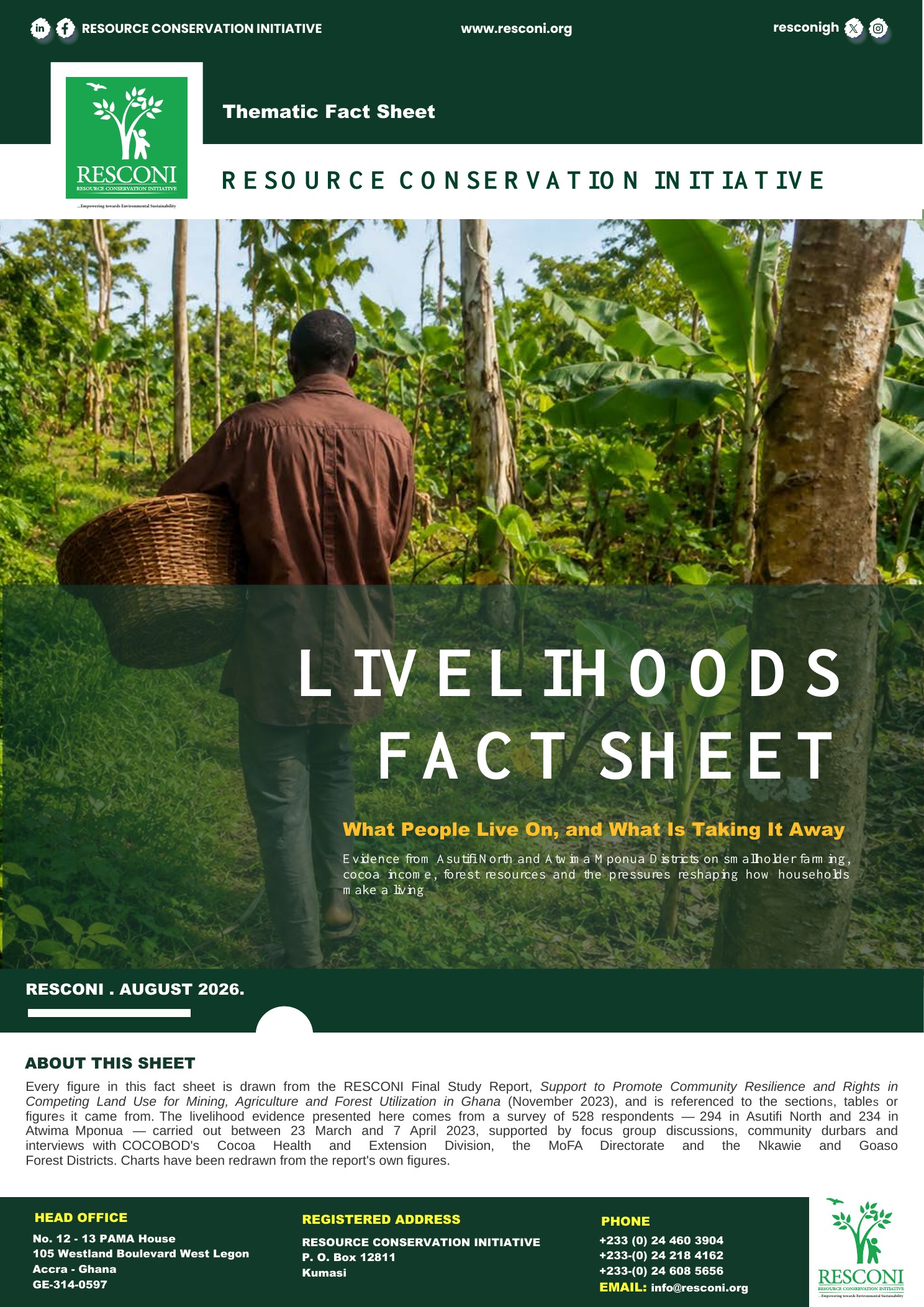
This fact sheet explores how households in Asutifi North and Atwima Mponua depend on smallholder farming, cocoa income and forest resources. It also examines the land-use and environmental pressures that are changing how communities earn a living and sustain their households.
Prepared by: Resource Conservation Initiative (RESCONI), August 2026 Read Document
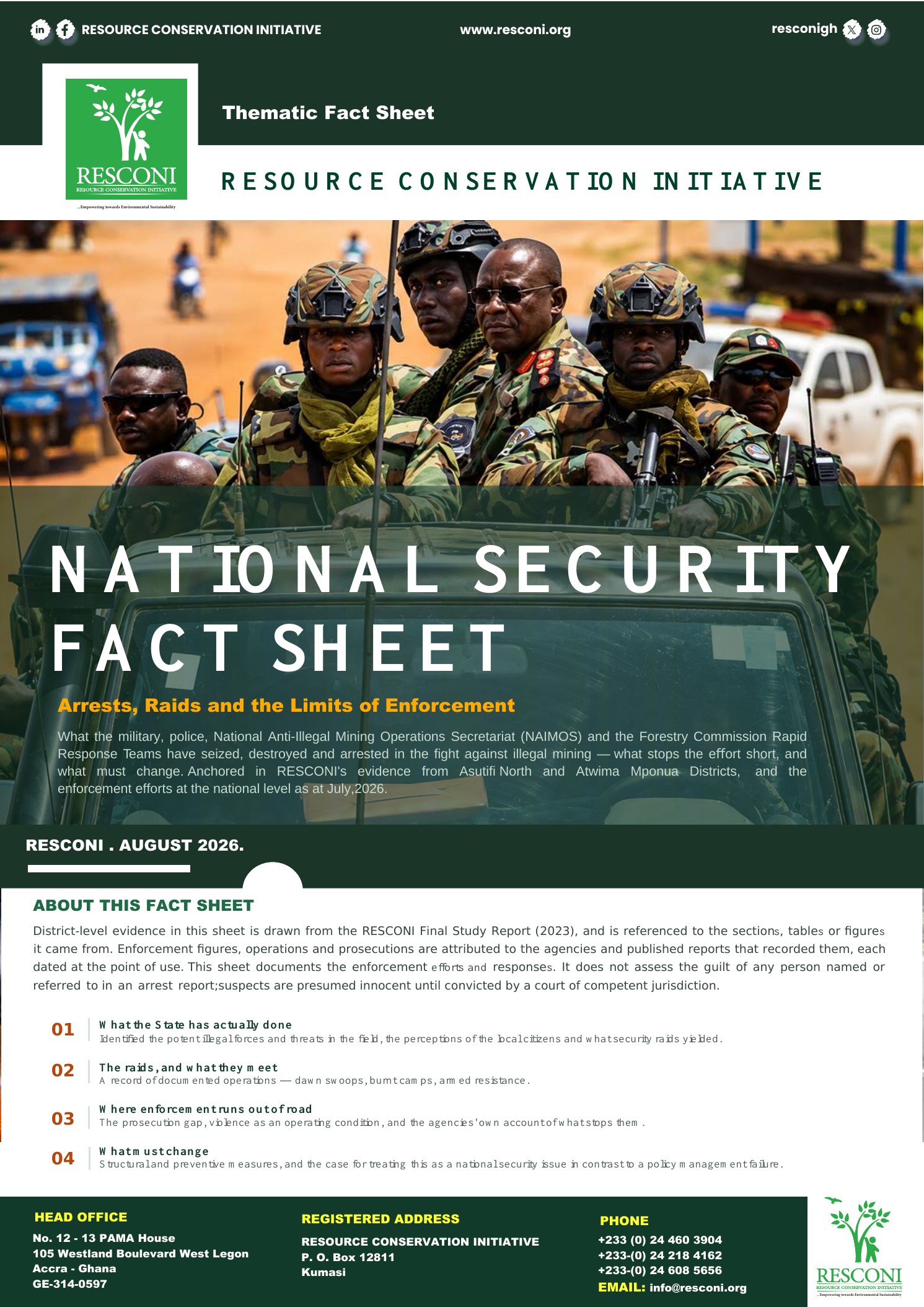
This fact sheet reviews enforcement responses to illegal mining, including operations involving the military, police, NAIMOS and Forestry Commission Rapid Response Teams. It examines arrests, raids, seizures, prosecution and operational gaps and outlines why illegal mining requires treatment as a national security concern.
Prepared by: Resource Conservation Initiative (RESCONI), August 2026 Read Document
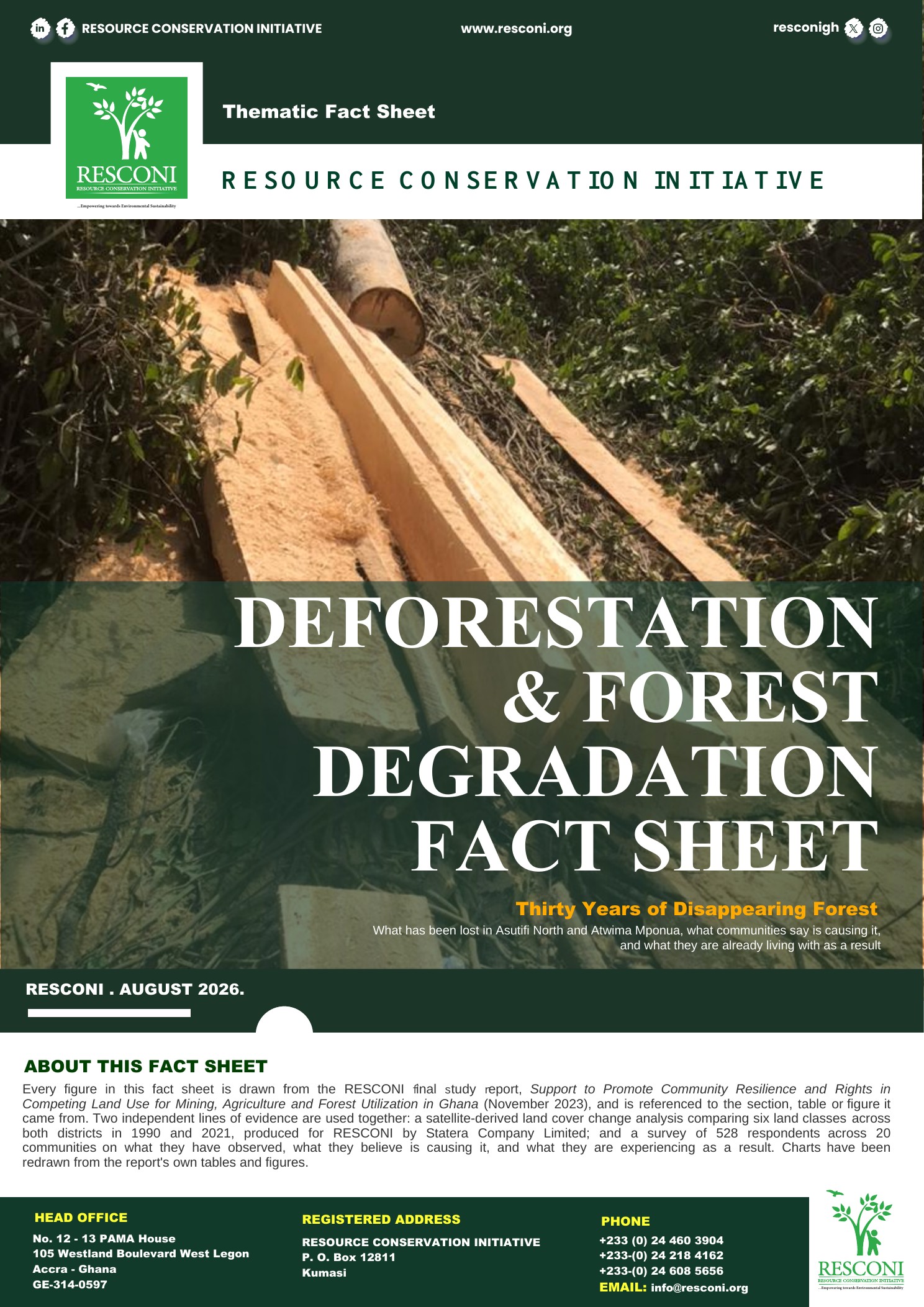
This fact sheet combines satellite-derived land-cover analysis from 1990 to 2021 with evidence from 528 respondents across 20 communities. It examines forest loss in Asutifi North and Atwima Mponua, the activities driving it, and the livelihood and environmental consequences communities are experiencing.
Prepared by: Resource Conservation Initiative (RESCONI), August 2026 Read Document
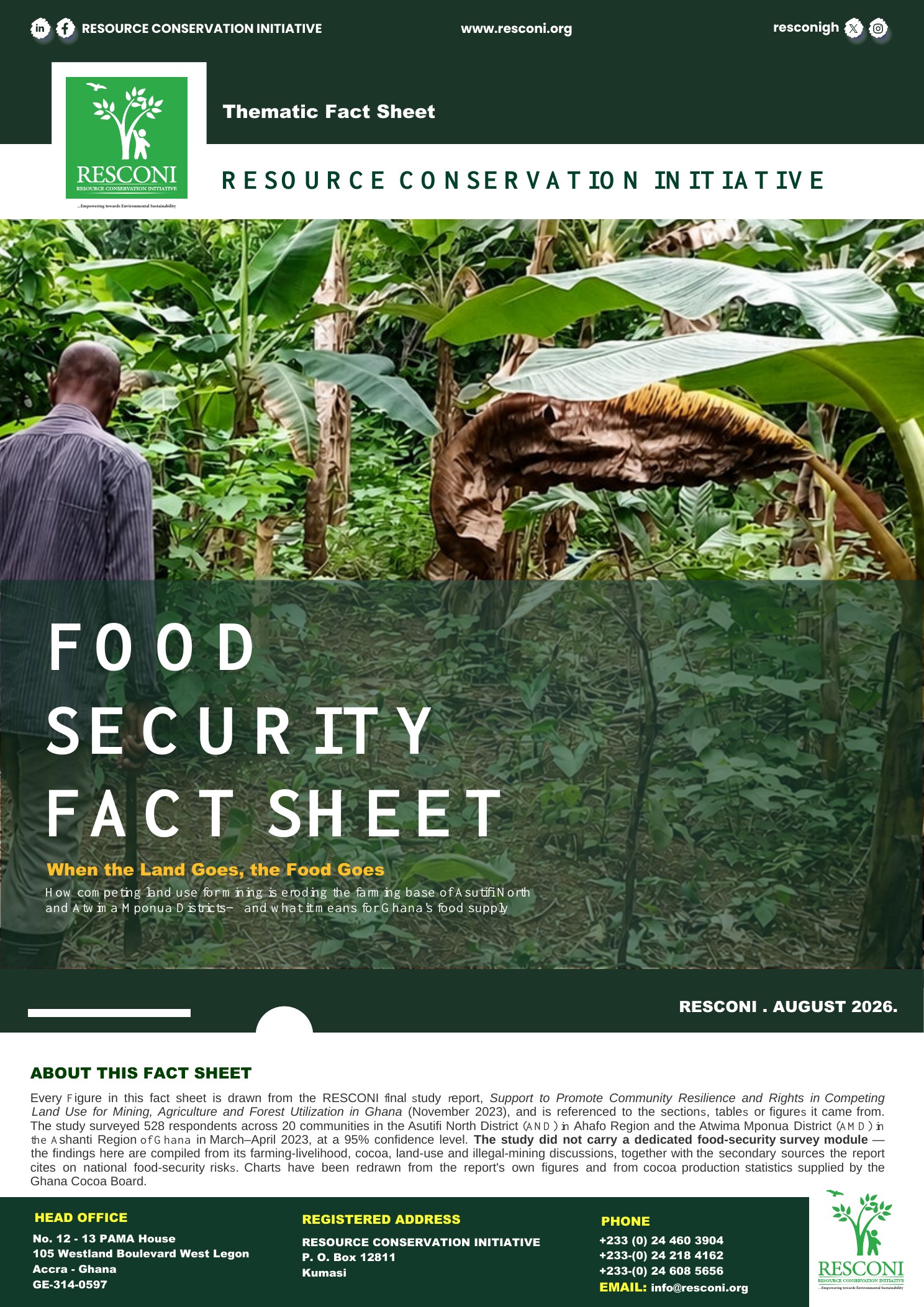
This fact sheet explains how competing land use, particularly mining, is eroding the farming base of Asutifi North and Atwima Mponua. Drawing on farming, cocoa, land-use and illegal-mining evidence, it highlights the implications for rural livelihoods and Ghana's wider food supply.
Prepared by: Resource Conservation Initiative (RESCONI), August 2026 Read Document
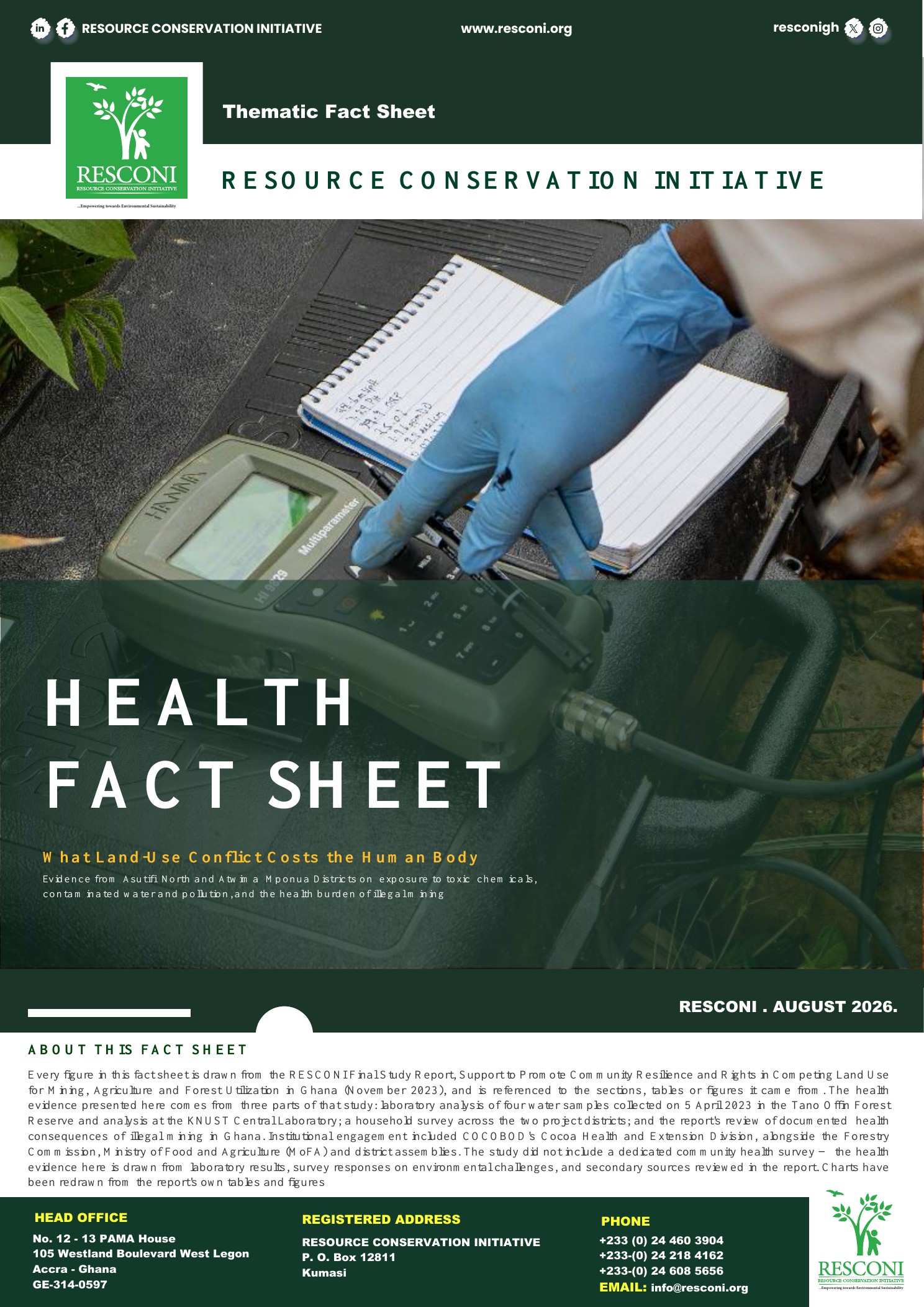
This fact sheet examines the human-health costs of competing land use and illegal mining in Asutifi North and Atwima Mponua. It brings together laboratory water analysis, household evidence and documented research on exposure to toxic chemicals, contaminated water and pollution.
Prepared by: Resource Conservation Initiative (RESCONI), August 2026 Read Document
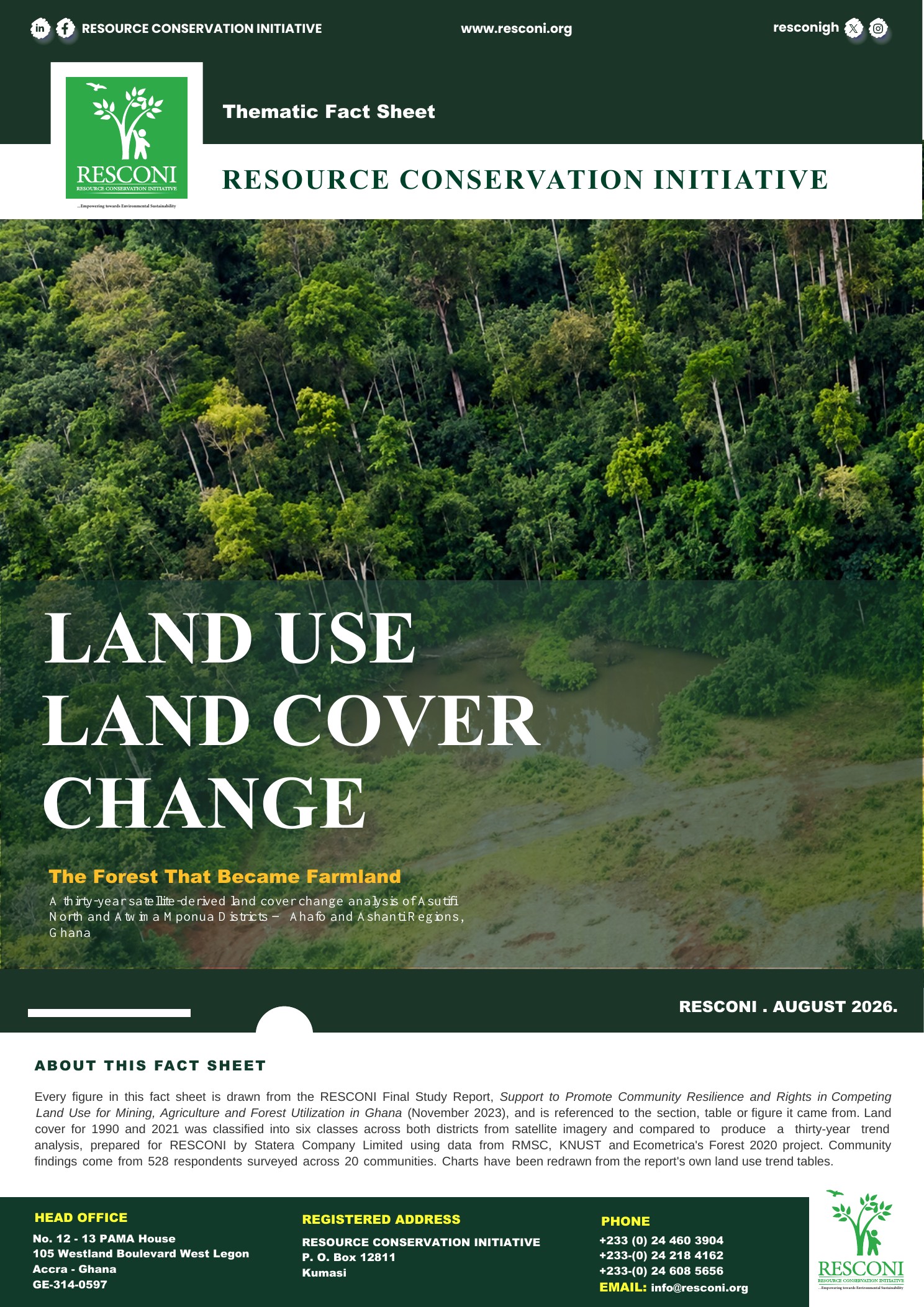
This fact sheet presents a thirty-year satellite-derived analysis of land-use and land-cover change in Asutifi North and Atwima Mponua. It compares six land classes between 1990 and 2021 and relates the observed changes to evidence gathered from 528 respondents across 20 communities.
Prepared by: Resource Conservation Initiative (RESCONI), August 2026 Read Document
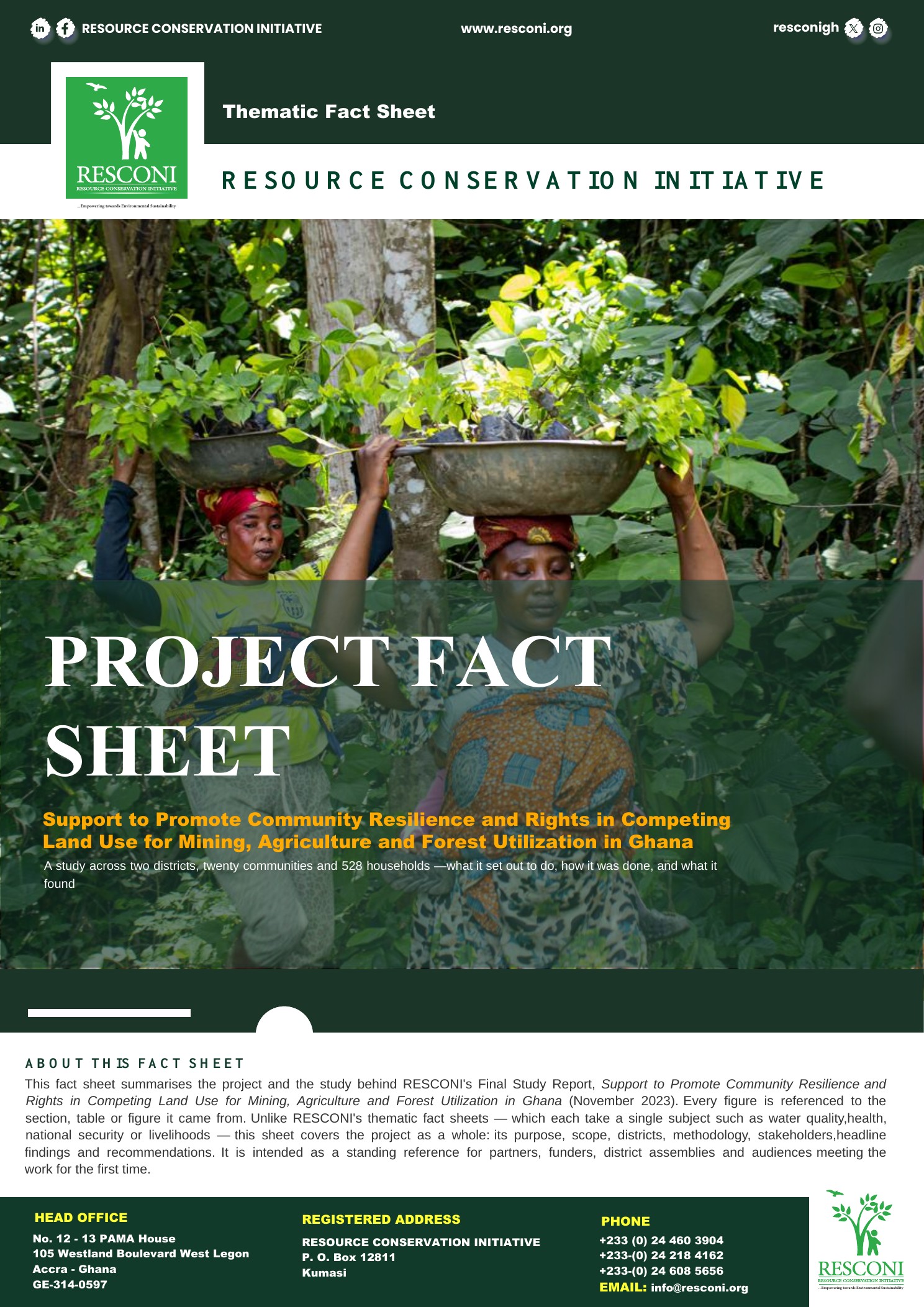
This fact sheet provides an overview of RESCONI's study on community resilience and rights amid competing land uses for mining, agriculture and forest utilization in Ghana. It summarises the project's purpose, study areas, methodology, stakeholders, principal findings and recommendations.
Prepared by: Resource Conservation Initiative (RESCONI) Read Document
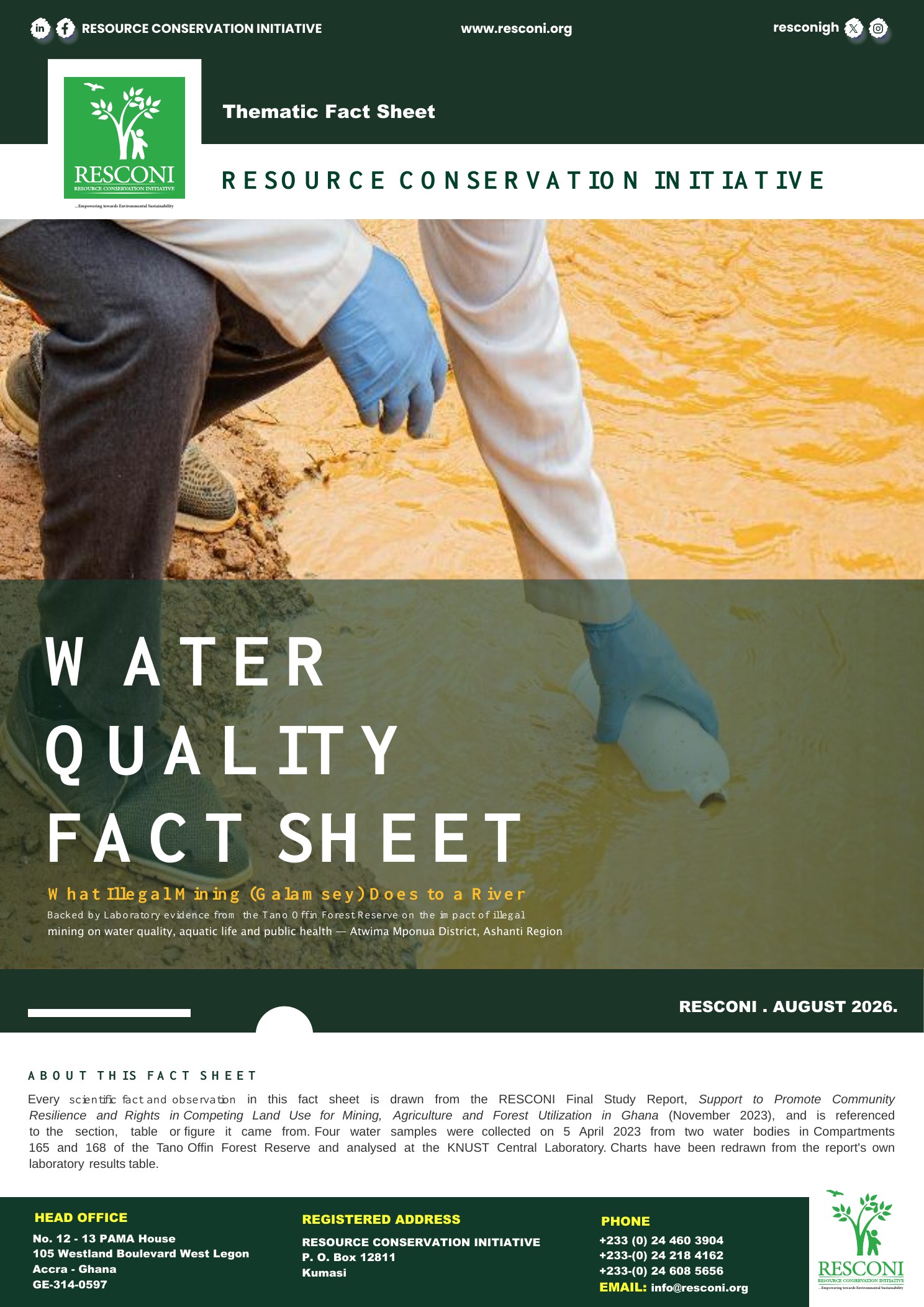
This fact sheet presents laboratory evidence on the effects of illegal mining on water quality in the Tano Offin Forest Reserve. Results from four water samples reveal risks to aquatic life and public health in the Atwima Mponua District.
Prepared by: Resource Conservation Initiative (RESCONI), August 2026 Read Document
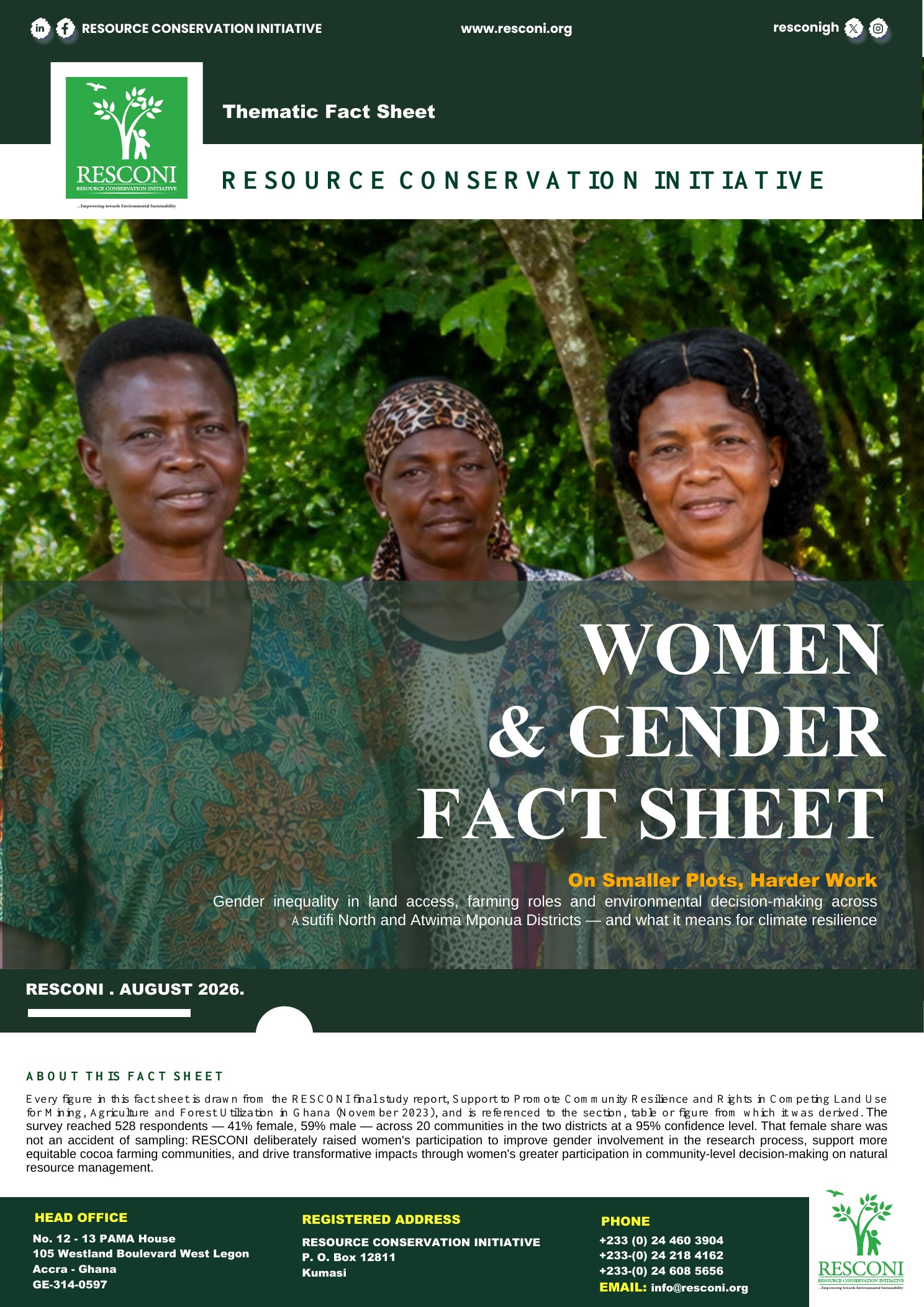
This fact sheet explores gender inequality in land access, farming roles and environmental decision-making across Asutifi North and Atwima Mponua. It highlights women's smaller farm holdings, substantial contribution across the agricultural value chain, and the implications for livelihoods and climate resilience.
Prepared by: Resource Conservation Initiative (RESCONI), August 2026 Read Document
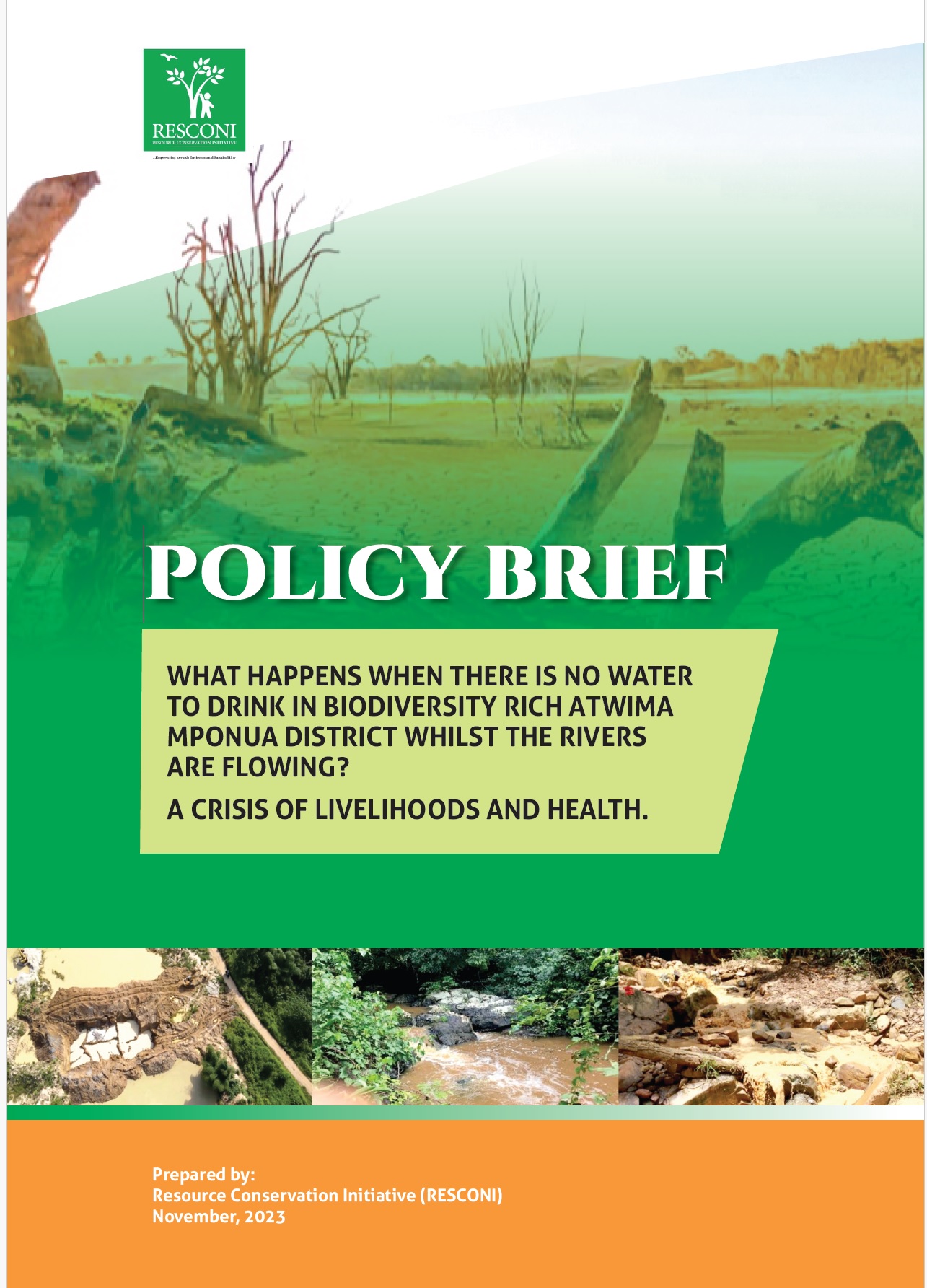
What Happens When There Is No Water to Drink in Biodiversity Rich Atwima Mponua District, Whilst the Rivers Are Flowing? A Crisis of Livelihoods and Health
Prepared by: Resource Conservation Initiative (RESCONI) November, 2023 Read Document
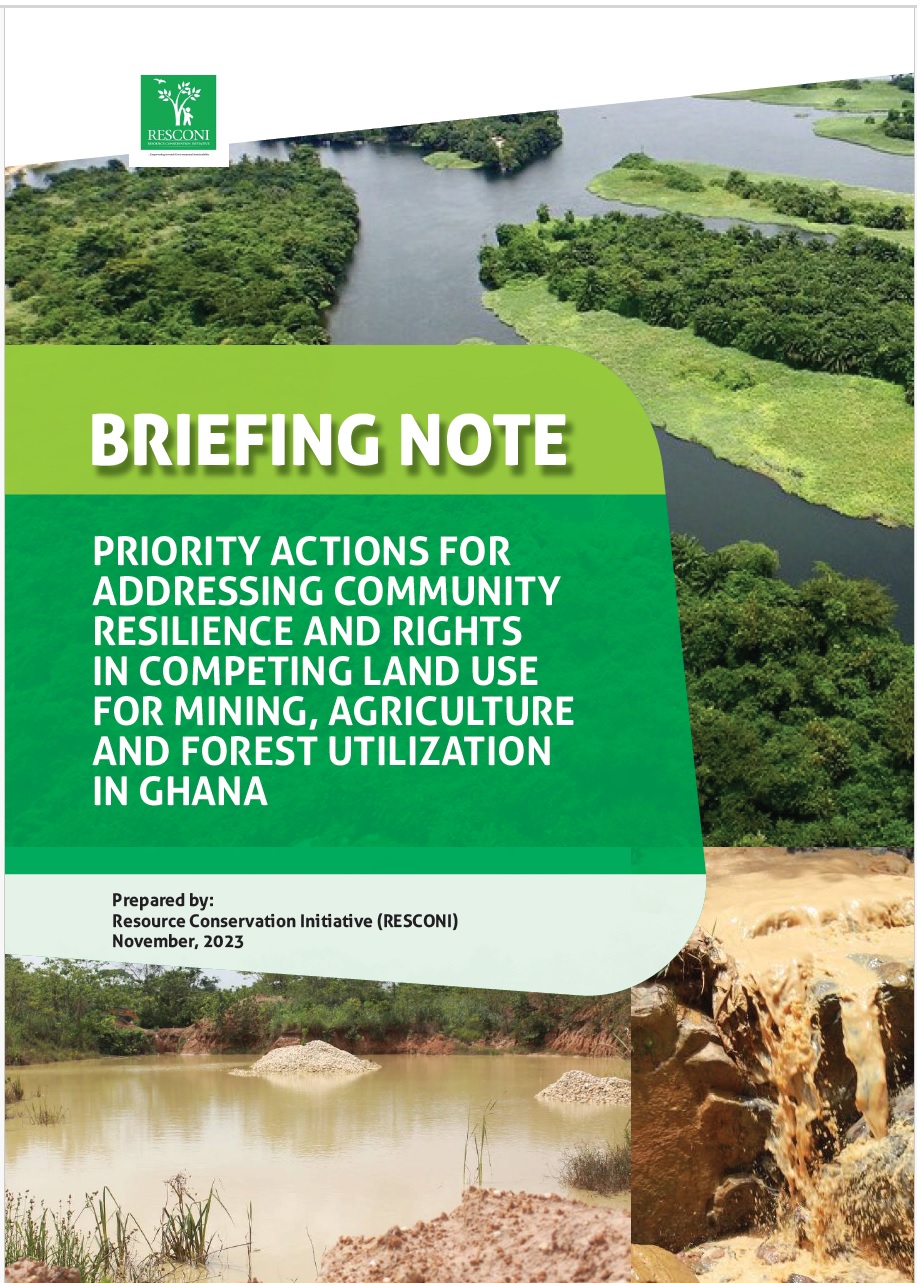
Priority Actions for Addressing Community Resilience and Rights In Competing Land Use For Mining, Agriculture, and Forest Utilization In Ghana
Prepared by: Resource Conservation Initiative (RESCONI) November, 2023 Read Document
Community Resilience Publication
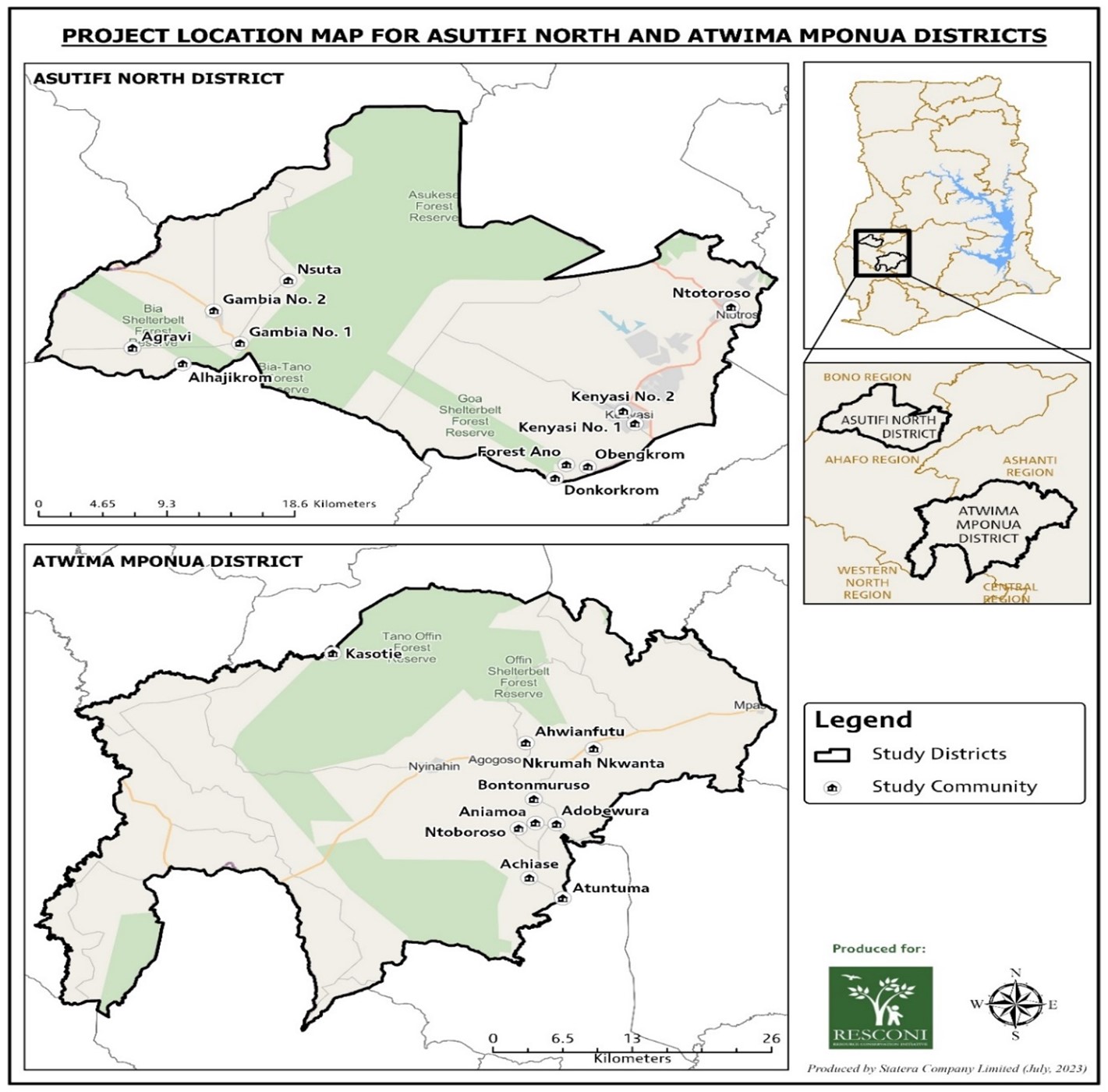
Promotion of Community Resilience and Rights in Competing Landuse: Case Study of Atwima Mponua and Asutifi North Districts in Ghana
Abstract
In Ghana, land is an essential natural resource that underpins economic growth and development through its utilization for farming, mining and as a forest resource. However, farming continues to be the mainstay of the economy, providing employment and livelihoods for many individuals and communities. The forest also serves as a source of timber, employment opportunities, and non-timber forest products, such as fruits, nuts, and medicinal plants, among others. Ghana’s forests are home to diverse wildlife, unique landscapes and cultural heritage sites which attract tourists and nature enthusiasts. Mining on the other hand, provides foreign exchange and revenue for government and local employment and offers economic growth, development and general prosperity. Read More